
Madagascar · Indian Ocean coast & islands
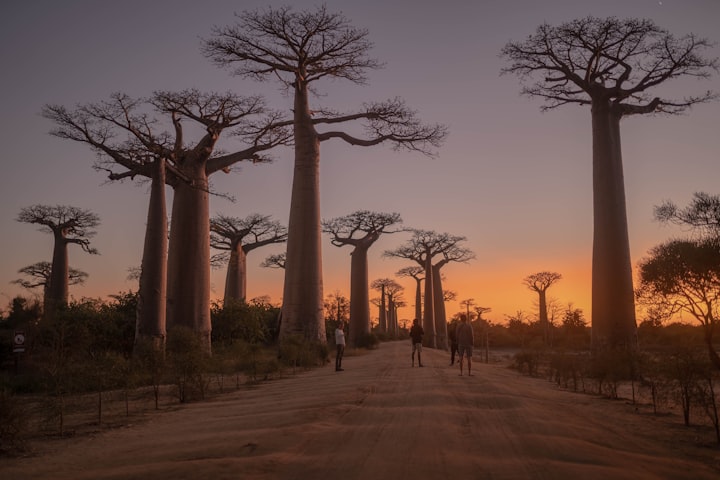
The Avenue of the Baobabs and the west.
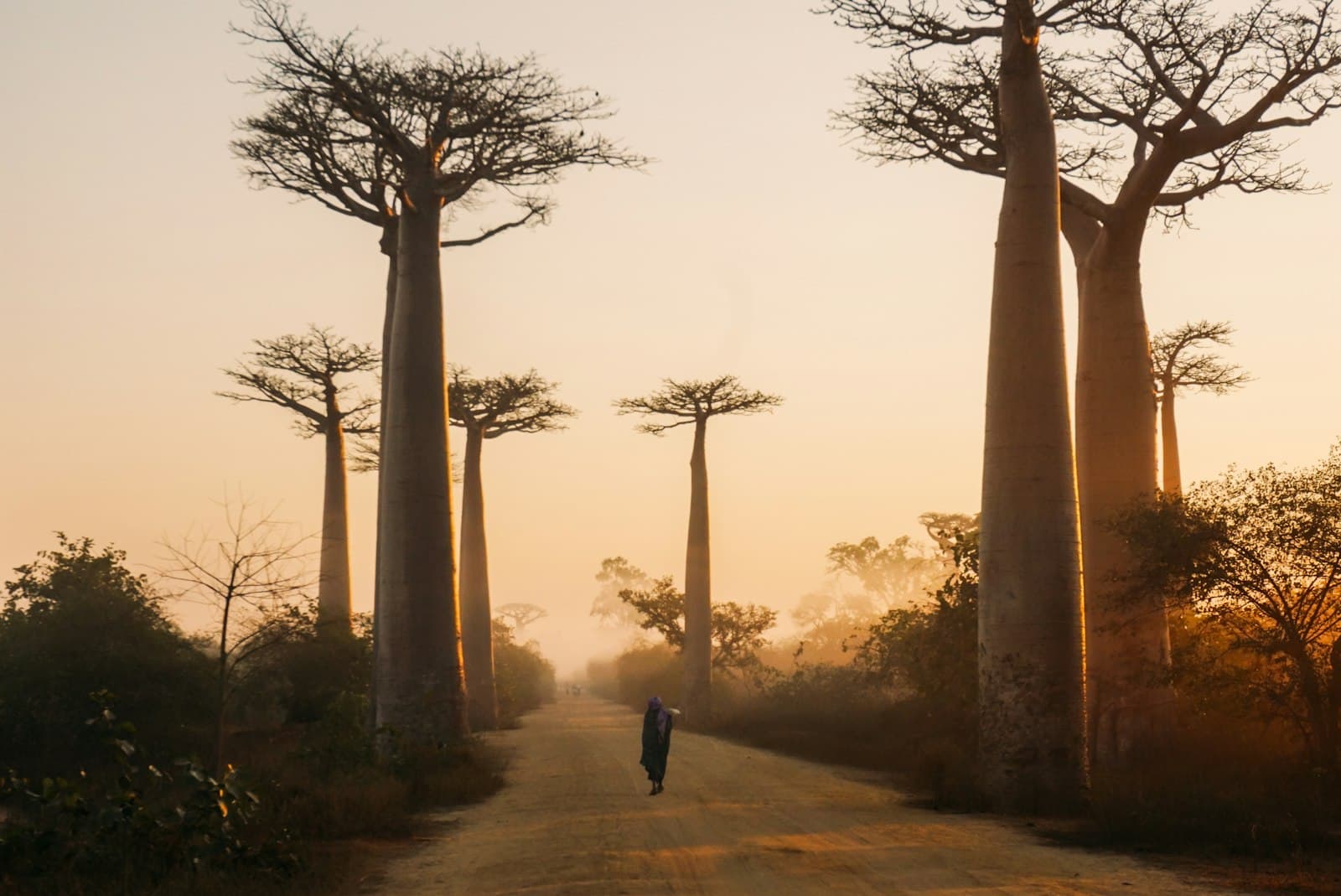
The Avenue of the Baobabs near Morondava is the country's defining image, and the western dry forests hold species found nowhere else.
Photo Yasmine Arfaoui / Unsplash
Kirindy is the place for fossa — Madagascar's largest predator, and one of the strangest animals on earth — and the western forests are dry, spiny and utterly unlike the eastern rainforest.
Tsingy de Bemaraha, a World Heritage Site, is a forest of limestone blades crossed by via ferrata and rope bridges. Reaching it is a genuine expedition and the road is seasonal.
How do you get to the Avenue of the Baobabs?
Fly from Antananarivo to Morondava on the west coast, or drive, which takes around two days. The avenue is a short drive north of Morondava on the road to Belo-sur-Tsiribihina, and most people time their visit for sunset or sunrise, when the trunks turn red.
What kind of baobabs are on the Avenue of the Baobabs?
Grandidier's baobabs, the tallest of the baobabs, which grow only in western Madagascar. Most of the world's baobab species are found only on the island. The trees along the avenue are the remnant of forest that once surrounded them, and they are protected as a natural monument.
What can you see in Kirindy Forest?
The fossa, Madagascar's largest predator, which is seen more reliably here than almost anywhere. Kirindy is also home to the giant jumping rat, found only in this stretch of the west coast, and to Madame Berthe's mouse lemur, the smallest primate in the world. Night walks are as important here as day walks.
How do you get to the Tsingy de Bemaraha?
North from Morondava by 4x4, crossing the Tsiribihina River by ferry, on a rough road that takes most of a day. The reward is a UNESCO World Heritage Site of razor-edged limestone pinnacles, explored with a guide on ladders, walkways, rope bridges and cables. It needs reasonable fitness and a head for heights.
How long should you spend in western Madagascar?
Two or three nights for Morondava, the avenue and Kirindy, and another three or four to add the Tsingy de Bemaraha, because of the time the road takes.
What is there to see in the Avenue of the Baobabs and the west?
Sample journeys that stop here
- Private Madagascar photographic tour →Discover Madagascar through the lens on an exclusive private photography tour. From the island's otherworldly baobab landscapes and pristine coastlines to its rare wildlife and vibrant local cultures, every day presents a new opportunity to capture something remarkable.
What does the Avenue of the Baobabs and the west pair well with?
- Andasibe and the eastern rainforestAndasibe is the closest rainforest to the capital and the reliable place to see and hear the indri, the largest living lemur.
- The south and the spiny forestIsalo is sandstone canyon country, and the spiny forest beyond it is one of the most alien landscapes in the world.
- Nosy Be and the island coastNosy Be in the north-west is the country's beach destination, and the smaller islands around it are the better part of it.
Planning
Start planning your adventure